
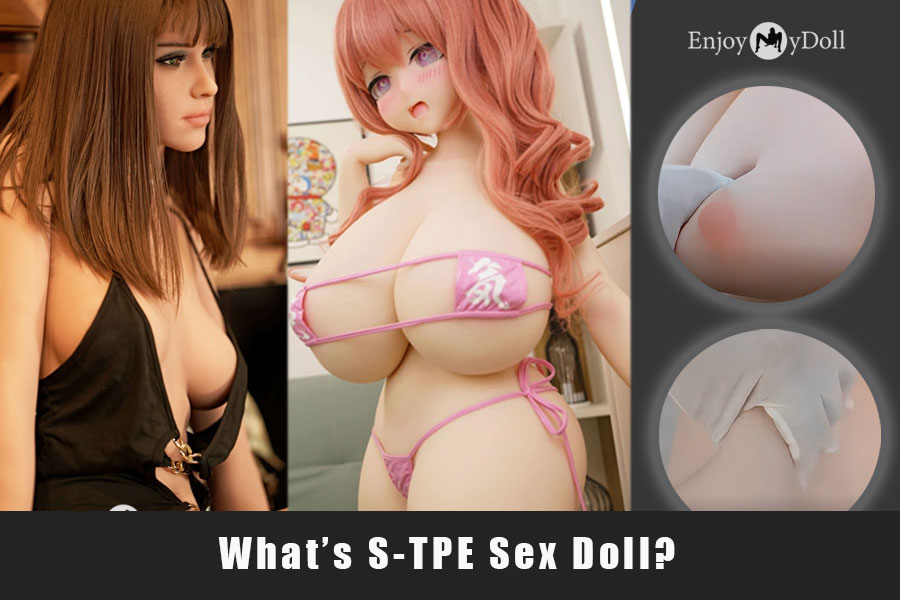
In the world of realistic companions, material means everything to some degree. For over 10 years, the market has been locked in a two-way battle between traditional TPE (Thermoplastic Elastomer) and high-end Silicone. Each came with distinct trade-offs: silicone offered durability but at a high cost and firmness, while TPE provided unmatched softness but struggled with oil leakage and a short lifespan. However, a new contender is rewriting the rules. Yes, that’s the S-TPE!
What is S-TPE?
S-TPE is a hydrogenated, modified version of SEBS that promises to bridge the gap between affordable softness and premium durability. If you are considering buying a new doll or are frustrated with your current TPE doll’s maintenance, understanding S-TPE is the key to a smarter investment. Considering many newbies don’t have any idea on STPE, so this article provides a comprehensive, data-driven analysis of STPE sex doll technology based on material science and real-world user data. You can have a look at the S-TPE introduction video from one of our cooperative manufacturers.
S-TPE Sex Doll Brands
Here we have collected some brands or say manufacturers that support creating S-TPE love dolls.
– WM Doll: Since September 2024, all WM Doll models support S-TPE production.
– Dolls Castle: Dolls Castle has outstanding model design ability. Considering that many doll lovers are inquiring the S-TPE doll, it allows customers to customize the doll in whatever material, including TPE, S-TPE, Silicone, and Ultra-soft silicone.
– Irokebijin/Piper Doll/Doll4Ever: These three brands are from the same manufacturer Doll4Ever. Previously, it only accepted traditional TPE and silicone doll orders, until the product upgrade in mid-2024. That upgrade quit the TPE material and apply the softer S-TPE material to all TPE models.
– Climax Doll/CLM: Starting from 2025, CLM added S-TPE material upgrade option to all of its TPE sex doll models, which gives doll buyers another choice according to the actual budget and requirement. (>>CLM OFFER S-TPE for ALL TPE DOLLS NEWS)
……The Chemistry Behind the Change: Why S-TPE is Different?
S-TPE vs. TPE, what’s the difference? To understand the leap in quality, we must first take a look at the chemical “Achilles’ heel” of traditional TPE (often referred to as S-TPE).
The Problem with Standard TPE
Standard TPE is essentially a sponge soaked in oil. It relies on a linear molecular chain structure (styrene copolymers mixed with plasticizer oil). To achieve that signature “real skin” softness, manufacturers must add a high volume of white oil, which leads to inherent instability:
– Oil Migration (Leaking): Over time, the oil naturally migrates to the surface. This makes the doll sticky, attracts dust like a magnet, and blurs painted details like veins and skin texture.
– Oxidation: The linear chains break down when exposed to air and UV light. This causes the surface to “powder” (atomization) and micro-tears to appear, drastically reducing the lifespan to roughly 1-2 years.
– Temperature Sensitivity: Standard TPE hardens and cracks below -10°C and deforms permanently above 50°C.
S–TPE – A Solution for Cross-linked Stability
S-TPE utilizes a hydrogenated modified SEBS (Styrene-Ethylene-Butylene-Styrene) structure. Think of the difference as the difference between a bowl of loose spaghetti (TPE) and a knitted sweater (S-TPE). Below are some benefits of owning an S-TPE love doll.
– Cross-linked Network: The molecular chains are chemically bonded to form a network. This traps the plasticizer oil inside the material.
– Superior Oil Control: Because the oil cannot escape, the doll stays clean, non-sticky, and retains its painted details (fingernails, veins, areolas) for years rather than months.
– Thermal Resilience: STPE maintains elasticity from -30°C to 80°C, making it safer for warm water baths without fear of deformation.
Head-to-Head Comparison: S-TPE vs. TPE vs. Silicone
Based on real investigation data from industry distributors (e.g. Kanadoll, Jessy Doll etc.) and user stress tests, here is the technical breakdown of how these materials perform in real life.
|
S-TPE vs. TPE vs. Silicone – An Overview |
|||
| TPE | S-TPE | Premium Silicone | |
| Softness (Realism) | Excellent (Very soft) | Excellent (Nearly identical to human skin) | Moderate (Can be firm, though softer blends exist) |
| Oil Secretion | Very Low (70% reduction in cleaning loss) | High (Gets sticky/dusty in 6-9 months) | None (Inert material) |
| Tear Strength | Low (Easy to tear at joints) | High (Cross-linked for durability) | Very High |
| Heat Resistance | Poor (Deforms >50°C) | Good (Stable up to 80°C) | Excellent (Medical grade) |
| Price (a brief range for the life-sized dolls) | $700 – $1,200 | $1,300 – $1,800 | $2,000+ |
| Lifespan | 1 – 2 years | 3 – 5+ years | 10+ years |
Verdict: S-TPE is not just “TPE 2.0”, but a fundamental material upgrade. It retains the hypoallergenic softness of TPE while borrowing the structural integrity of silicone.
Real-World Advantages: What S-TPE Means for You?
Why should a buyer pay a premium for STPE over standard TPE? Here are the tangible, daily-use benefits.
- The “Clean” Factor
One of the biggest complaints about TPE sex dolls is the “oil slick” residue. You wash the doll, powder it with cornstarch, and a week later, it might be sticky again. S-TPE’s anti-fouling coating and oil-locking mechanism mean you clean the doll because you want to, not because you have to. This reduces cleaning frequency a lot, preserving the doll’s surface finish.
- Lifespan and Investment Value
While a standard TPE doll might look worn gruadually, maybe after 1-2 years (fading makeup, torn armpits, cracked elbows), an S-TPE doll is just breaking in. The enhanced shape memory means that stretched areas (like bent elbows or spread legs) return to their original shape without sagging or tearing. For frequent users, the higher upfront cost of S-TPE pays for itself by outlasting 1.5-2 standard TPE dolls.
- Detail Retention
Artists spend hours painting realistic blood vessels, skin pores, and gradients onto love dolls. On standard TPE, these details blur as oil rises to the surface. While S-TPE locks the oil in, so the surface remains porous enough to hold the pigment but stable enough to prevent bleeding. Your S-TPE doll will look “new” for much longer.
- Limitations and Considerations
While S-TPE is superior to standard TPE, it is not a magic bullet. Being a responsible consumer means understanding its limits.
– Weight: S-TPE is currently suitable for both skinny and big breasted fat body types. But you should know that the material’s density makes these large-volume dolls a little bit heavy to handle comfortably.
– Repairability: While S-TPE is easier to repair than silicone, it requires specific high-heat tools. Standard TPE glue does not always bond well with cross-linked STPE.
– The Silicone Challenge: S-TPE closes the gap, but medical-grade silicone remains the king of inertness. If you have severe allergies or want a doll that will last longer without any degradation, silicone is still the gold standard. However, the price point is still factor that keeps many normal doll lovers away from the platinum silicone dolls. If you want a more affordable silicone doll, you can explore some new or small silicone brands, ready-made in-stock silicone dolls, or big-sale ones.
Market Trends: Is S-TPE the Future or A Stepping Stone?
Google search trends reveals that “Silicone sex doll” searches still outpace “TPE” by 6-7 times. Consumers are clearly demanding durability and safety. S-TPE sits perfectly in the middle of this transition.
Who is S-TPE for?
– The Upgrader: Those who owned some TPE doll(s), hated the oil maintenance, but find the silicone doll too expensive or firm.
– The Frequent User: Those who usually use the doll, for example weekly, and need tear resistance at the joints and heat resistance for warming toys.
– The Detail Enthusiast: Those who want hyper-realistic body painting that lasts longer than 6 months.
– The Next Frontier: The industry is already looking ahead. Many people guess that the next generation may include “Ultra TPE” with self-healing scratches or “Ultra Silicone” integrated with AI robotics. For now, however, S-TPE represents the most significant leap in “soft material” technology in the last decade.
Conclusion
The S-TPE sex doll is not a marketing gimmick, but a legitimate solution to the “oil leak vs. high cost” dilemma. By hydrogenating the molecular structure, manufacturers have created a material that is softer than traditional TPE, almost as durable as silicone, and significantly cleaner than both.
If your budget is strictly under $1000, standard TPE is your entry point. If you have $2000+, medical-grade silicone is unmatched. However, for the vast majority of users looking for the “sweet spot” of price, performance, and realism ($1300-$1800 range), S-TPE is currently the best material on the market.